
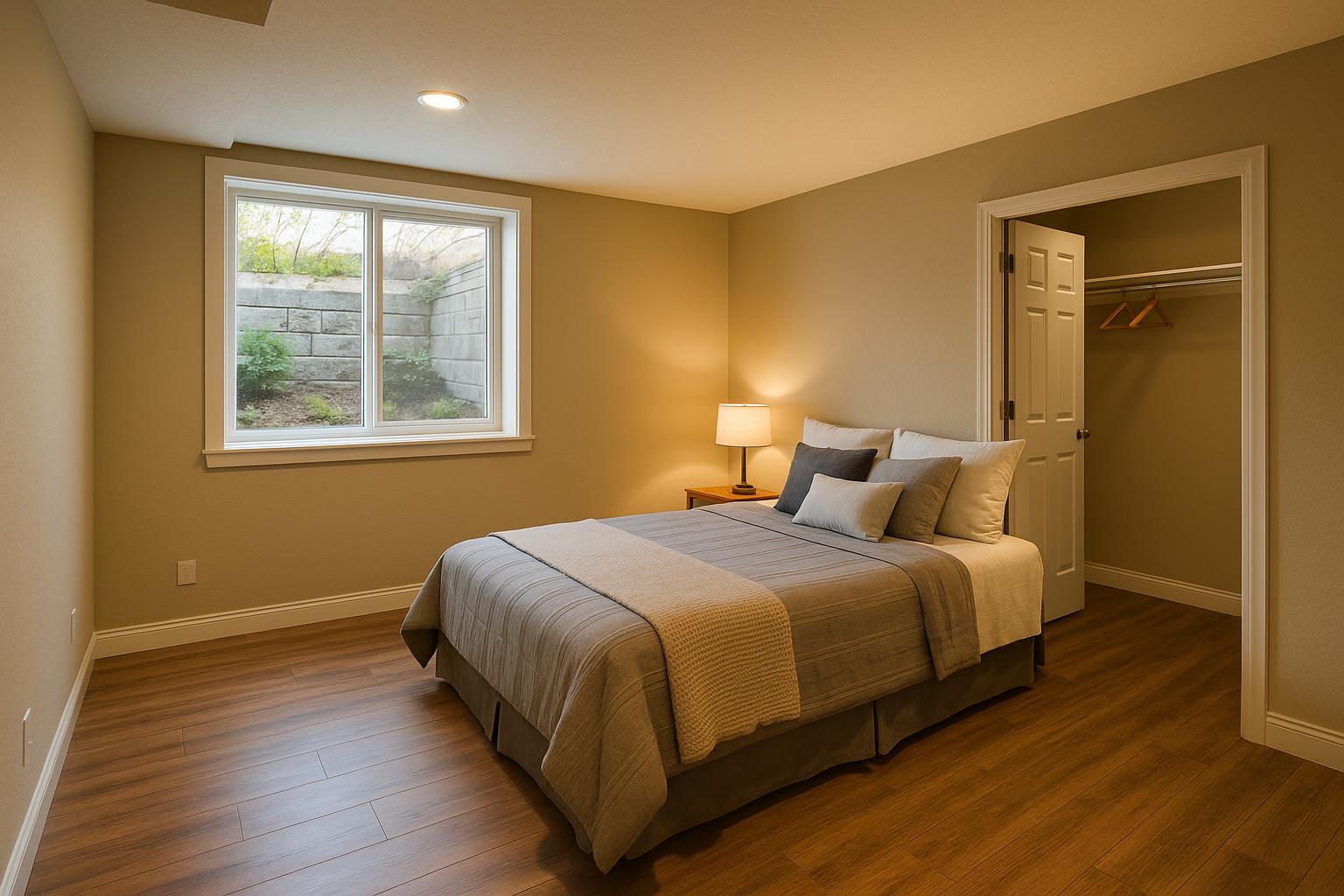
Your Basement Could Be the Extra Bedroom You Need
San Diego's housing costs are no secret. Whether you're making room for a growing family, setting up a guest suite, or creating a space for an aging parent, converting your basement into a bedroom is one of the smartest investments a homeowner can make. But before you move a bed downstairs and call it done, there are critical legal and safety requirements you need to understand.
A basement bedroom that doesn't meet local building codes isn't just a liability — it can cause problems when you try to sell your home, file an insurance claim, or pass an inspection. At Cottonwood Basement Experts, we help homeowners across San Diego navigate these requirements so their new basement bedrooms are safe, comfortable, and fully code-compliant.
What Makes a Basement Bedroom "Legal" in San Diego?
The City of San Diego follows the California Building Code, which has specific requirements for any room classified as a bedroom. These aren't suggestions — they're mandatory. Here's what your basement bedroom needs to meet code:
1. Minimum Room Size
A legal bedroom must have at least 70 square feet of floor area, with no dimension less than 7 feet. Most basements easily meet this requirement, but it's worth measuring carefully if you're working with an unusual layout or planning to partition the space into multiple rooms.
2. Minimum Ceiling Height
The ceiling must be at least 7 feet 6 inches in at least 50% of the room's floor area. Basements with low ceilings can sometimes be modified, but this is one of the first things we evaluate during a consultation. Exposed ductwork, pipes, and beams can reduce your effective ceiling height, so planning around mechanical systems is essential.
3. Egress Window or Door
This is the requirement that trips up most homeowners. Every legal bedroom must have at least one emergency escape and rescue opening — typically an egress window. The window must meet these minimums:
- Minimum net clear opening of 5.7 square feet
- Minimum opening height of 24 inches
- Minimum opening width of 20 inches
- The bottom of the opening must be no more than 44 inches above the floor
For basement bedrooms, this usually means installing a new egress window with a window well if the room is below grade. This is one of the most common projects we handle for San Diego homeowners, and it makes a dramatic difference in both safety and natural light.
4. Closet (Practical Expectation)
While California code doesn't technically require a closet for a room to be called a bedroom, real estate appraisers and buyers almost universally expect one. If you're investing in a basement bedroom, adding a closet is a smart move that increases the room's value and functionality.
5. Smoke and Carbon Monoxide Detectors
Every bedroom needs a working smoke alarm inside the room and outside the sleeping area. If your home has any fuel-burning appliances or an attached garage, carbon monoxide detectors are also required. These are simple additions, but they must be hardwired with battery backup in new construction and remodels.
6. Adequate Heating
The room must have a permanent heating source capable of maintaining a temperature of 68°F, measured three feet above the floor. Portable space heaters don't count. We typically extend your existing HVAC system or install a dedicated mini-split unit, which also provides cooling — a nice bonus during San Diego's warmer months.
Do You Need a Permit?
Yes. Converting a basement into a bedroom in San Diego requires a building permit. The permit process ensures your plans meet structural, electrical, plumbing, and fire safety codes. Skipping the permit might seem like a way to save time and money, but it creates serious risks:
- Insurance issues: Unpermitted work may not be covered if something goes wrong.
- Resale complications: Buyers and their inspectors will flag unpermitted bedrooms, potentially killing a deal or reducing your sale price.
- Safety hazards: Code requirements exist to protect the people living in the space. Cutting corners on egress, ventilation, or electrical work puts your family at risk.
We handle the permitting process for our clients, preparing the necessary plans and coordinating with the City of San Diego's Development Services Department so you don't have to navigate the bureaucracy alone.
Moisture Control: The Hidden Priority
Even in San Diego's relatively dry climate, basements are vulnerable to moisture intrusion. Before finishing any basement space — especially one where someone will sleep — waterproofing must be addressed. Moisture behind walls leads to mold growth, musty odors, and damage to your new finishes.
Our approach includes evaluating your foundation for cracks, testing for moisture vapor transmission through the concrete slab and walls, and installing appropriate vapor barriers and drainage solutions before any framing begins. Homeowners in neighborhoods like La Mesa and El Cajon, where some older homes sit on sloped lots with partially below-grade basements, often benefit significantly from proactive waterproofing.
Making the Space Feel Like a Real Bedroom
Meeting code is the minimum. Making the space feel inviting is what turns a legal bedroom into a room someone actually wants to use. Here are the upgrades that make the biggest difference:
- Egress windows with larger wells: Maximizing the window size brings in more natural light and makes the room feel less like a basement.
- Recessed lighting: Low-profile ceiling lights preserve headroom and create a clean, modern look.
- Quality flooring: Luxury vinyl plank is our most popular recommendation for basement bedrooms — it's waterproof, warm underfoot, and looks great.
- Sound insulation: Adding insulation between the basement ceiling and the floor above reduces noise transfer, giving the bedroom occupant real privacy.
- A nearby bathroom: If your basement doesn't already have a bathroom, adding one alongside the bedroom project dramatically increases convenience and home value. Many of our clients in Chula Vista and Coronado combine these projects to create a true in-law suite.
What Does a Basement Bedroom Conversion Cost in San Diego?
Costs vary depending on the scope of work, but most basement bedroom projects in the San Diego area fall between $15,000 and $40,000. The biggest cost variables include:
- Whether an egress window needs to be cut and installed
- The extent of waterproofing required
- HVAC modifications
- Whether you're adding a bathroom or closet
- Electrical and lighting upgrades
Compared to building an addition or buying a larger home, a basement bedroom conversion offers exceptional value. You're using space you already own and transforming it into something functional.
Start With a Basement Assessment
Every basement is different. Ceiling height, moisture conditions, mechanical system locations, and foundation type all influence what's possible and what it will cost. That's why we always start with an on-site assessment before providing a detailed proposal.
If you're a homeowner in San Diego, National City, or any of the surrounding communities and you've been thinking about putting that basement to work, we'd love to help you figure out the best path forward. At Cottonwood Basement Experts, we specialize in turning underused basements into spaces your family will actually enjoy — safely and up to code.