
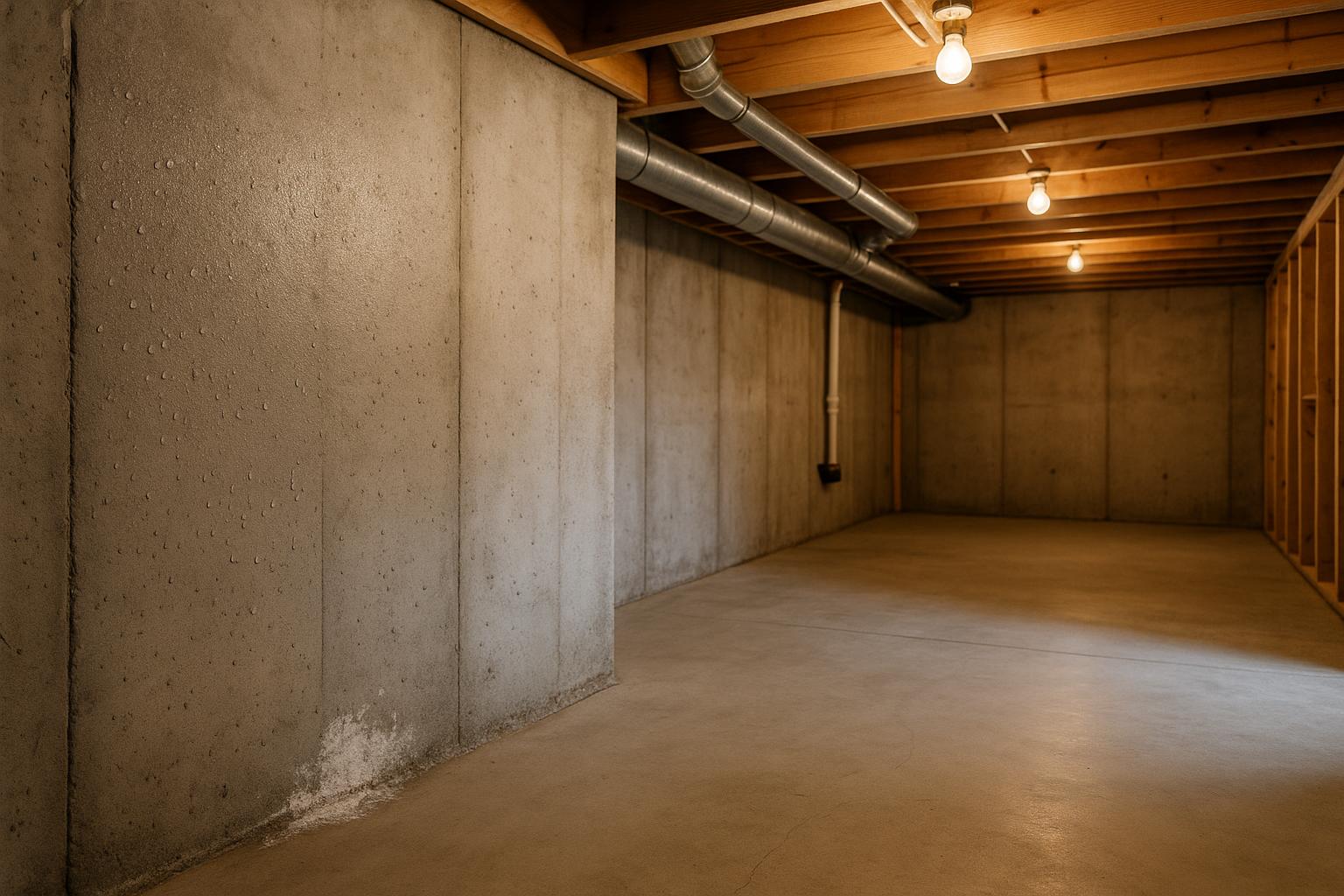
Why Basement Humidity Is a Bigger Deal Than You Think
When most people think of humid basements, they picture homes in the Midwest or along the East Coast. But San Diego homeowners aren't immune to moisture problems below grade. Coastal fog, seasonal rain, shifting soil conditions, and poor drainage can all push unwanted moisture into your basement — and once it's there, it creates a chain reaction of problems that only get worse over time.
If you've ever walked downstairs and noticed a musty smell, felt dampness on the walls, or spotted discoloration on your concrete floor, your basement is trying to tell you something. Ignoring it doesn't just mean living with an unpleasant space. It means risking mold growth, damaged belongings, compromised structural integrity, and a basement that can never be fully used.
The good news? Basement humidity is a solvable problem. Here's how to identify it, understand what's causing it, and take the right steps to reclaim your space.
Common Signs of Excess Moisture in Your Basement
Humidity doesn't always announce itself with a puddle on the floor. More often, it shows up in subtle ways that homeowners overlook for months or even years. Here are the warning signs to watch for:
- Musty or earthy odors: That classic "basement smell" is almost always caused by mold or mildew feeding on moisture.
- Condensation on walls, pipes, or windows: Water droplets forming on cool surfaces are a clear indicator that humidity levels are too high.
- White, chalky deposits on concrete walls: This is called efflorescence — mineral salts left behind when water seeps through masonry and evaporates.
- Peeling paint or bubbling drywall: Moisture trapped behind wall finishes will eventually push its way out.
- Warped or buckled flooring: If you have any kind of flooring installed in your basement, persistent moisture will damage it from underneath.
- Visible mold or mildew: Dark spots on walls, ceilings, or stored items are a sign the problem has already progressed.
- A damp or clammy feeling: Sometimes you can simply feel it. If the air downstairs feels heavier and wetter than the rest of your home, trust your instincts.
What Causes Basement Humidity in San Diego?
Even in a city known for sunshine and mild weather, several factors can introduce moisture into a basement. Understanding the source is critical because the right fix depends entirely on where the water is coming from.
Groundwater and Hydrostatic Pressure
When rain saturates the soil around your foundation, water pushes against basement walls and floors. Over time, it finds its way through cracks, joints, and porous concrete. Neighborhoods in La Mesa, El Cajon, and parts of eastern San Diego that sit on clay-heavy soil are particularly susceptible because clay retains water and expands, increasing pressure against foundations.
Poor Exterior Drainage
If the grading around your home slopes toward the foundation instead of away from it, rainwater collects right where you don't want it. Clogged gutters and missing downspout extensions make the problem worse by dumping roof runoff directly against the house.
Condensation from Temperature Differences
Basements are naturally cooler than the rest of the house. When warm, moist air from upstairs or outside meets those cool basement surfaces, condensation forms. This is especially common during San Diego's late-summer humidity spikes and in homes near the coast in Coronado, National City, and Chula Vista.
Plumbing Leaks
Sometimes the moisture source isn't dramatic — it's a slow drip from a pipe, a leaking water heater, or a failing seal around a basement bathroom fixture. These small leaks add up quickly in an enclosed space with limited ventilation.
How to Fix Basement Humidity the Right Way
A dehumidifier can help manage symptoms, but it won't solve the underlying problem. To truly fix a humid basement, you need to address the moisture at its source.
Start with Professional Waterproofing
Basement waterproofing is the single most effective investment you can make. Depending on the situation, this might include interior drainage systems, sump pump installation, vapor barriers, or exterior waterproofing membranes. A professional assessment will determine which approach — or combination of approaches — is right for your home.
At Cottonwood Basement Experts, we evaluate every basement individually because no two moisture problems are exactly alike. A home in Chula Vista dealing with high water tables needs a different solution than a home in El Cajon where poor grading is the culprit.
Improve Exterior Drainage
Before any interior work begins, it's worth checking the basics outside. Make sure the ground slopes away from your foundation at a rate of at least six inches over the first ten feet. Clean your gutters, extend your downspouts, and consider adding a French drain if water consistently pools near the house.
Seal Cracks and Gaps
Cracks in basement walls and floors are open invitations for moisture. Hydraulic cement and epoxy injections can seal active cracks, but if the cracks are caused by ongoing foundation movement, you'll need to address the structural issue first.
Upgrade Ventilation
Basements with little or no airflow trap moisture and create the perfect environment for mold. Adding ventilation — whether through egress windows, mechanical ventilation systems, or simply improving air circulation — makes a significant difference. Egress window installation serves double duty here: it brings in fresh air and natural light while meeting safety code requirements if you ever want to use the basement as a living space.
Choose the Right Flooring
If you're finishing or remodeling your basement, flooring selection matters. Traditional hardwood and standard carpet are poor choices for below-grade spaces. Instead, consider luxury vinyl plank, ceramic tile, or engineered flooring systems designed specifically for basements. These materials resist moisture and won't warp, buckle, or grow mold when humidity levels fluctuate.
Why Fixing Humidity First Makes Everything Else Possible
Here's the thing most homeowners don't realize: almost every basement remodeling project — whether it's a home theater, a bathroom addition, or a full basement finishing buildout — depends on getting moisture under control first. No contractor should be installing drywall, flooring, or electrical systems in a basement that hasn't been properly waterproofed. If they do, you're setting yourself up for costly repairs down the road.
That's why we always start with a thorough moisture assessment before talking about design plans. It's not the glamorous part of a basement remodel, but it's the foundation — literally — that everything else is built on.
Take the First Step
If your basement shows any of the signs we've described, don't wait for the problem to get worse. Moisture damage is progressive. What starts as a faint musty smell can turn into a full-blown mold remediation project if left unchecked.
Cottonwood Basement Experts helps homeowners across San Diego, La Mesa, El Cajon, Chula Vista, National City, and Coronado transform their basements from damp, neglected spaces into dry, comfortable rooms their families actually use. Whether you need waterproofing, a complete basement finish, or just want someone to take a look and tell you what's going on, we're here to help.
Reach out today for a consultation. Your basement has potential — let's make sure moisture isn't standing in the way.